
A Reflection on Enough
There’s a line in an old Cat Stevens song that’s been following me lately, the way certain truths do when we’re finally ready to hear them: “I know we’ve come a long way, we’re changing day to day… but tell me, where do the children play?”
I’ve been thinking about that question. Not just about children, but about all of us. About what we’ve traded for convenience. About the cost of having everything we want when we want it.
I grew up in a different world. A slower one.
Summer evenings stretched long and golden, measured not by clocks but by the fading light. My brother and I would fish in the ocean until the sun melted into the horizon, our bare feet in cool water, our hands sticky with salt and patience, our hearts full after casting lines and watching the current, waiting for that electric tug that said something wild and alive was on the other end.
We didn’t have much. But we had enough.
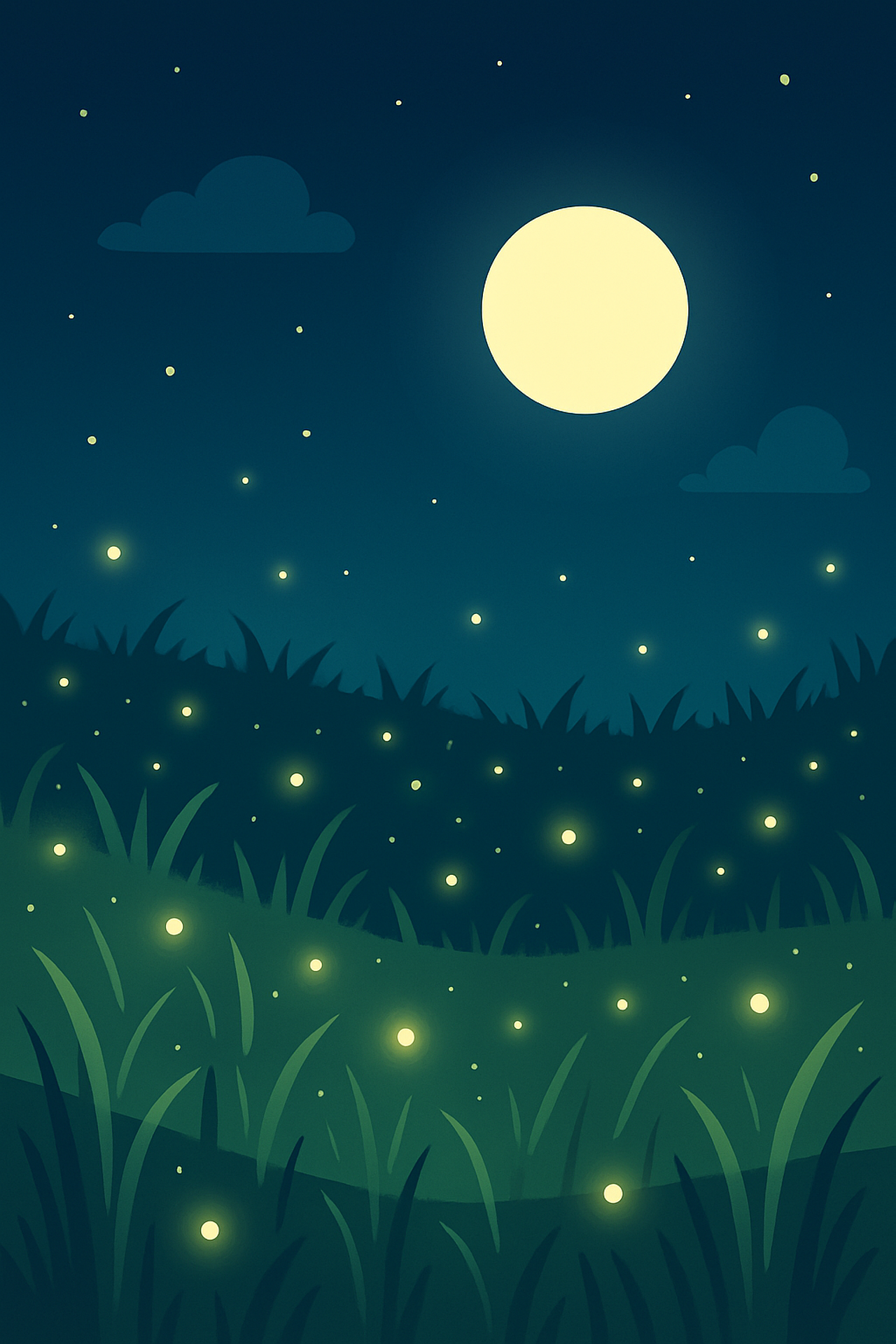
We had twilight thick with humidity and possibility. We had mason jars to catch fireflies—those tiny lanterns that turned ordinary yards into wonderlands. We stayed out past dark not because we were rebelling, but because darkness itself was part of the adventure. The night sky was our ceiling, vast and star-crowded, reminding us how small we were and somehow how connected.
We knew when to come home by the feeling in our bones, by our mother’s voice carried on the breeze, by the simple understanding that some things—sleep, home, tomorrow—were worth returning to.
How much is enough?
It’s an uncomfortable question in a culture that tells us more is always better. That faster is always smarter. That convenience is always progress.
We’ve built our jumbo planes, just like Cat Stevens sang. We’ve cracked the sky with our scrapers. We can get anything we want, when we want it, delivered to our doorstep before we’ve even finished wanting it.
But somewhere in all that getting, we’ve lost something essential.
We’ve lost the pause.
That space between desire and fulfillment where anticipation lives, where patience teaches us what we truly need versus what we’ve been told to want. The rhythm of waiting for the fish to bite. The discipline of staying still enough to let the firefly land on your palm before you try to catch it.
I see the cost of this collective “more, more, more” in so many of us. I see it in the exhaustion. The overwhelm. The sense that no matter how much we accomplish, there’s always another task, another notification, another thing we should be doing. One more thing that will make us good enough.
I see it in the sleep problems that have reached epidemic proportions—our nervous systems so overstimulated by constant access, constant light, constant everything that they’ve forgotten how to rest.
I see it in the anxiety that comes from having infinite choices but no clear sense of what truly matters. From being able to have anything but not knowing what we actually need.
And perhaps most heartbreaking of all, I see it in the loneliness. We’re more “connected” than ever, yet so many of us have forgotten what it feels like to simply be with another person without the buffer of screens, without the urgency of elsewhere pulling at our attention.
When will the pain of what we’ve lost finally cause us to say “Enough”?
Maybe we’re already there.
Maybe that tightness in your chest when you wake up to 47 notifications isn’t progress. Maybe the fact that you can’t remember the last time you sat outside doing nothing, watching the day fade, isn’t advancement.
Maybe our children’s (and grandchildren’s) inability to occupy themselves without screens isn’t evolution. Maybe our collective forgetting of how to be bored, how to wait, how to make our own entertainment from sticks and water and imagination… maybe that’s the loss we haven’t fully reckoned with yet.
The song asks: Where do the children play?
But I think the deeper question is: Do they even remember (or know) how?
Do we?
I think about those childhood evenings now with a clarity I didn’t have then. I didn’t know I was rich, with the feeling of warm grass under my back as I watched fireflies rise like prayers into the darkness. Rich with a kind of wealth that money can’t buy and technology can’t replicate.
I didn’t know that the patience required to fish—the waiting, the hoping, the accepting when nothing bit—was teaching me something essential about life. About how not everything can be controlled or commanded. About how sometimes the reward is the waiting.
I didn’t know that the darkness itself, when we weren’t afraid of it, when we let it wrap around us like a blanket, was a kind of teacher. Showing us that not everything needs to be illuminated, explained, captured, shared.
Some things are precious exactly because they’re temporary. Fleeting. Ungoogleable.
And that is where the peace lives.
Not in having everything we want when we want it. Not in the jumbo planes or the slot-machine summers or the sky scrapers that reach for clouds we’ve forgotten to notice.
The peace lives in the returning. To simplicity. To presence. To enough.
It lives in the radical act of sitting still while the world screams for your attention.
It lives in the revolutionary choice to opt out of the race toward more, more, more… and instead ask: What do I actually need to feel whole? To sleep well? To wake up grateful?
It lives in remembering that our bodies and minds were not designed for this pace, this noise, this constant everything. That the anxiety, the insomnia, the sense of being perpetually overwhelmed—these aren’t personal failures. They’re natural responses to an unnatural speed.
So, where do the children play?
Maybe the better question is: Where can we all learn to play again?
I’m not naive enough to think we can return to those firefly summers entirely. The world has changed. We’re all a lot older.
But I am wise enough now to know this: We need to create spaces—pockets of slowness, moments of enough—where we remember what it feels like to be human at human speed.
To watch without scrolling. To wait without refreshing. To be satisfied with what is, rather than constantly reaching for what’s next.
So here’s what I’m wondering, and what I invite you to wonder with me:
What would it feel like to sit outside as the light changes, with nothing but your own thoughts and the sounds of the world settling into evening?
What would it feel like to declare, just for today, that what you have is enough? That you are enough? That this moment, ordinary and unoptimized as it is, is actually the whole point?
Can you remember what it felt like to catch fireflies? To wait for fish? To measure time not in productivity but in presence?
Can you create even one small pocket of your life where the question isn’t “What’s next?” but “What’s here?”
The truth is, we’ve come a long way. We’re changing day to day, just like the song says.
But we’ve also lost something precious in our pursuit of progress.
We’ve lost the knowing of when to stop. When to say, “This. This right here is enough.”
We’ve lost the wisdom of darkness, of boredom, of empty hours that teach us who we are when we’re not producing or consuming or performing.
We’ve lost the simple joy of being rather than doing.
Remember that the fireflies are still out there, every summer. They didn’t stop glowing. We just stopped looking.
The children—and the child within us—still need to play. Still need that unstructured, unhurried, unproductive time where magic happens and souls breathe and we remember what it means to be fully, gloriously, enough.
Where Do the Children Play?
February 4, 2026
meet inge
I’m Inge, a Psychiatric Nurse Practitioner passionate about helping others feel grounded, resilient, and well. Here on the blog, I share insights on mental health, prevention, meditation, clean skincare, and nutrition—everything I turn to in my own daily life. I hope this space becomes a trusted part of your wellness journey.
LATEST FROM THE BLOG
I had a friend tell me something last week that stopped me in my tracks. She said, “I feel like I’m drowning in other people’s thoughts.” She’s 67, retired from teaching, and spends hours each day scrolling through news apps, checking Facebook, watching YouTube videos about gardening (her passion), and texting with her grandchildren. All […]

When Your Body Remembers What Your Mind Tries to Forget Have you ever noticed how grief settles into your shoulders? How anxiety lives in your chest like a bird that won’t stop fluttering? Or how years of unspoken words seem to tighten around your throat? If you’re nodding right now, you’re not imagining things. Your […]
Postmenopausal women often face unique challenges, one of the most pervasive being insomnia. As hormonal shifts disrupt sleep patterns, sleepless nights can become all too familiar, leading to daytime fatigue and a decline in overall well-being. But rest assured, effective strategies exist to reclaim restful nights. By understanding the underlying factors contributing to insomnia, from […]

You’ve learned about breathing techniques, herbs, exercise, self-compassion, and creating a calm environment. Each of these tools can help reduce anxiety. But how do you put them all together into a sustainable system that actually works in your daily life? That’s where an anxiety management plan comes in. An anxiety management plan isn’t about adding […]