
The Healing Power of Dandelion, Nettle & Lemon Balm
If you are in your 60s or beyond, you may have noticed that spring no longer feels the same as it did when you were younger. The energy is still there — that ancient pull toward renewal — but your body may need a gentler invitation to join in. After a long winter, your liver may be sluggish, your nervous system braced against another hard season, your mineral reserves quietly depleted.
This is where plant medicine meets clinical wisdom. The three herbs in this tea — dandelion, nettle, and lemon balm — have been used across cultures for thousands of years, and modern research is now confirming what traditional healers always knew: these humble plants carry profound gifts for the aging body and mind.
As a Psychiatric Mental Health Nurse Practitioner, I believe that healing is never one-dimensional. A cup of tea can be medicine, meditation, and morning ritual all at once. Let me tell you why this particular blend has become a spring staple in my own home — and why I share it with the patients I work with.
Why Spring Is the Right Time for This Tea
In traditional herbal medicine, spring is the season of the liver — a time for clearing what accumulated over winter and preparing the body for the vitality of warmer months. The ancient systems of Ayurveda and Traditional Chinese Medicine both describe spring as a time when the body naturally wants to release, renew, and recalibrate.
If you are over 60, this seasonal wisdom is especially relevant. Hormonal shifts, years of accumulated stress, and the natural slowing of digestive and detoxification processes mean that spring can be a powerful window for gentle, intentional support. You do not need a dramatic cleanse. You do not need to deprive yourself. What you need is a warm cup, a quiet moment, and three plants working quietly on your behalf.
Meet the Three Herbs
🌼 Dandelion — The Liver’s Best Friend
That bright yellow flower you may have spent decades pulling out of your lawn is actually one of the most nutritionally rich plants on earth. Every part of the dandelion — root, leaf, and flower — offers something valuable.
Dandelion leaf is a natural, gentle diuretic that supports kidney function and helps the body release excess fluid that may have accumulated over winter. Unlike pharmaceutical diuretics, dandelion leaf actually replenishes potassium while it works, rather than depleting it. It is rich in vitamins A, C, and K, and contains calcium and iron in forms the body absorbs readily.
Dandelion root goes deeper, supporting liver detoxification and bile production, which in turn supports fat digestion and hormone metabolism. As estrogen levels shift in the post-menopausal years, the liver plays an increasingly important role in processing these hormonal changes gracefully. Dandelion root is a gentle, consistent ally in that work.
For your spring tea, you can use either the leaf or the root — or a combination. The leaf yields a slightly lighter, more mineral-tasting cup; the root brings more bitterness and earthy depth. Both are beautiful.
🌿 Nettle — The Mineral Powerhouse
Stinging nettle (Urtica dioica) is one of the most nutrient-dense plants available to us. Once dried or infused in hot water, the ‘sting’ is gone entirely, leaving behind a deep green brew packed with minerals that most women over 60 are chronically short on.
Nettle is particularly rich in calcium, magnesium, iron, and silica — a constellation of minerals that directly supports bone density, nerve function, sleep quality, and cardiovascular health. For women navigating the post-menopausal years without hormone replacement, or for those who are simply committed to staying strong and vital, nettle is one of the most underrated nutritional tools available.
Nettle also has a long traditional use for seasonal allergies — its natural antihistamine properties make it an especially welcome addition to your spring routine when pollen counts are climbing. Many of my patients are surprised to discover that a consistent cup of nettle tea can make spring mornings significantly more comfortable.
From a psychiatric perspective, magnesium is particularly meaningful. Low magnesium levels are consistently linked to anxiety, poor sleep, irritability, and low mood — all concerns common to the patients I work with. Nettle tea is a gentle, food-based way to begin addressing that deficiency alongside other strategies.
🍋 Lemon Balm — The Nervous System’s Gentle Reset
Lemon balm (Melissa officinalis) is a member of the mint family with a bright, citrusy fragrance and centuries of use as a calming herb. Its Latin name, Melissa, means ‘honeybee’ — and like honey, it soothes and sweetens whatever it touches.
Research has confirmed what herbalists have long observed: lemon balm has measurable anxiolytic (anti-anxiety) effects, reducing activity in the nervous system without sedation or cognitive impairment. Unlike pharmaceutical anti-anxiety medications, lemon balm does not dull your thinking or create dependency. It simply helps your nervous system find its natural resting state.
For people over 60 who experience the kind of low-grade worry that is continually present beneath daily life — the health concerns, the changes in relationships, the quiet grief of transition — lemon balm is a compassionate companion. It is present in your cup not to mask what you feel, but to create enough stillness that you can meet it with more grace.
Lemon balm also has emerging research supporting its use for cognitive function and memory — making it a meaningful addition to any brain longevity protocol. As a Certified Brain Longevity Specialist, I include lemon balm in my own daily routine for exactly this reason.
In this blend, lemon balm is weighted slightly heavier than the other two herbs — 1½ teaspoons versus 1 teaspoon each — because it does the most immediate work on the nervous system and sets the tone for the entire cup.
The Spring Renewal Tea Recipe
| 🌿 Spring Renewal Tea — Serene Life Recipe Makes 1 cup | Prep: 2 min | Steep: 10–15 min Ingredients 1 tsp dried dandelion root or leaf 1 tsp dried nettle leaf 1½ tsp dried lemon balm leaf 8 oz filtered water, just off the boil (~200°F) Raw honey or a lemon slice (optional) Directions Bring water to a boil, then let it rest for 1–2 minutes. Combine herbs in an infuser or teapot. (If using dandelion root, simmer gently for 5 minutes first.). Pour water over herbs and cover to trap the aromatic oils. Steep 10–15 minutes. Strain, sweeten if desired, and sip slowly — this is your spring ritual. |
How to Make This a Spring Ritual
The recipe itself is simple. The practice around it is where the real medicine lives.
I encourage the patients I work with — and myself — to approach this tea as a five-minute mindfulness practice, especially in the spring when everything is asking for our attention at once.
A Simple Tea Ritual for Spring Mornings
- Let this be the first thing you do after you wake — before checking messages, news, or the day’s list.
- Boil your water with intention. As it heats, take three slow, full breaths. Feel the morning air. Notice what your body feels like today.
- Steep the herbs covered. This is not the time to multitask. Watch the color change. Smell the steam. Let the herbs do their work unhurried.
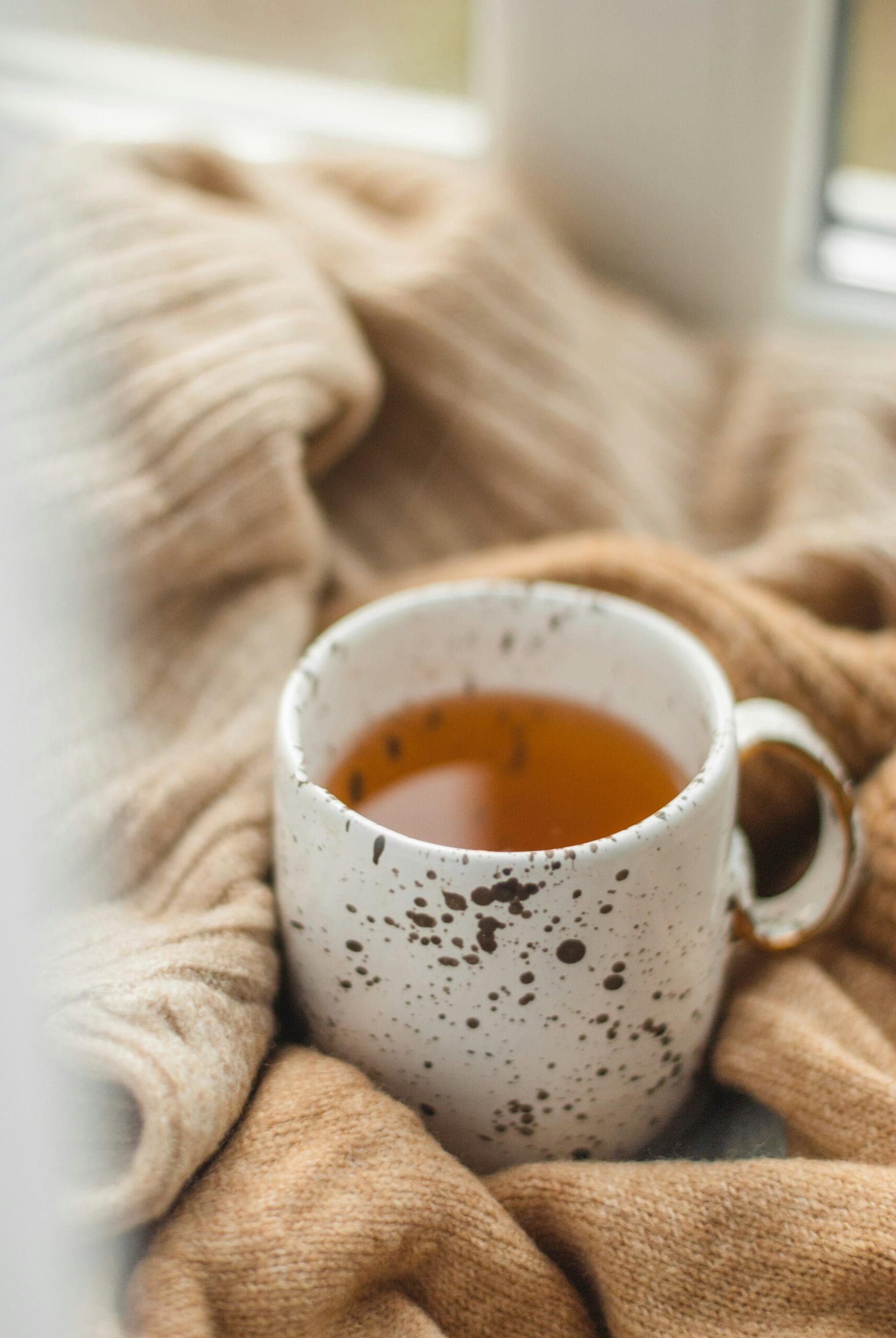
- Sit to drink it. Not standing at the counter. Sit — by a window if you can — and hold the warm cup with both hands.
- Notice five things. The color of the liquid. The warmth on your palms. The first sip. The quiet. Your own breathing.
This is not just a wellness practice. It is a reclamation of your morning — a signal to your nervous system that the day will unfold at a pace you choose, not one imposed upon you.
Clinical Considerations to Keep in Mind
As a clinician, I always want you to feel informed about the herbs you are using. This blend is gentle and food-safe for most women, but here are a few things worth knowing:
- Diuretic medications: Dandelion leaf has mild diuretic effects. If you are taking prescription diuretics or blood pressure medications, check with your provider before adding it regularly.
- Blood thinners: Dandelion and nettle are both high in Vitamin K, which affects clotting. If you are on warfarin or other anticoagulants, discuss with your prescriber.
- Thyroid medications: Nettle has a small effect on thyroid activity. This is generally positive, but if you are on levothyroxine or other thyroid medications, consistency is key — drink it at a consistent time, away from your medication.
- Ragweed allergies: Dandelion is in the same plant family as ragweed. If you have significant ragweed allergies, start with a small amount and see how you feel.
- Sedative medications: Lemon balm has mild calming effects. If you take sedatives or sleep medications, there is no danger in this tea, but be aware of the additive effect.
| A Note from Your Clinician This blog post is for educational purposes and does not constitute medical advice. If you are taking prescription medications—particularly diuretics, blood pressure medications, anticoagulants, or thyroid medications—please consult with your healthcare provider before adding new herbal teas to your routine. Herbal medicine is powerful, and personalized guidance ensures the safest, most effective results for you. |
A Final Thought
Spring is not a productivity challenge. It is not an invitation to do more, fix more, or become more. It is simply nature’s way of reminding us that renewal is not something we force — it is something we allow.
Three plants. A few minutes. A warm cup. The willingness to be still long enough to notice the season changing around you — and within you.
That is enough. That, in fact, is everything.
Your Spring Reset Starts in a Cup
March 25, 2026
meet inge
I’m Inge, a Psychiatric Nurse Practitioner passionate about helping others feel grounded, resilient, and well. Here on the blog, I share insights on mental health, prevention, meditation, clean skincare, and nutrition—everything I turn to in my own daily life. I hope this space becomes a trusted part of your wellness journey.
LATEST FROM THE BLOG


I had a friend tell me something last week that stopped me in my tracks. She said, “I feel like I’m drowning in other people’s thoughts.” She’s 67, retired from teaching, and spends hours each day scrolling through news apps, checking Facebook, watching YouTube videos about gardening (her passion), and texting with her grandchildren. All […]


When Your Body Remembers What Your Mind Tries to Forget Have you ever noticed how grief settles into your shoulders? How anxiety lives in your chest like a bird that won’t stop fluttering? Or how years of unspoken words seem to tighten around your throat? If you’re nodding right now, you’re not imagining things. Your […]

Postmenopausal women often face unique challenges, one of the most pervasive being insomnia. As hormonal shifts disrupt sleep patterns, sleepless nights can become all too familiar, leading to daytime fatigue and a decline in overall well-being. But rest assured, effective strategies exist to reclaim restful nights. By understanding the underlying factors contributing to insomnia, from […]