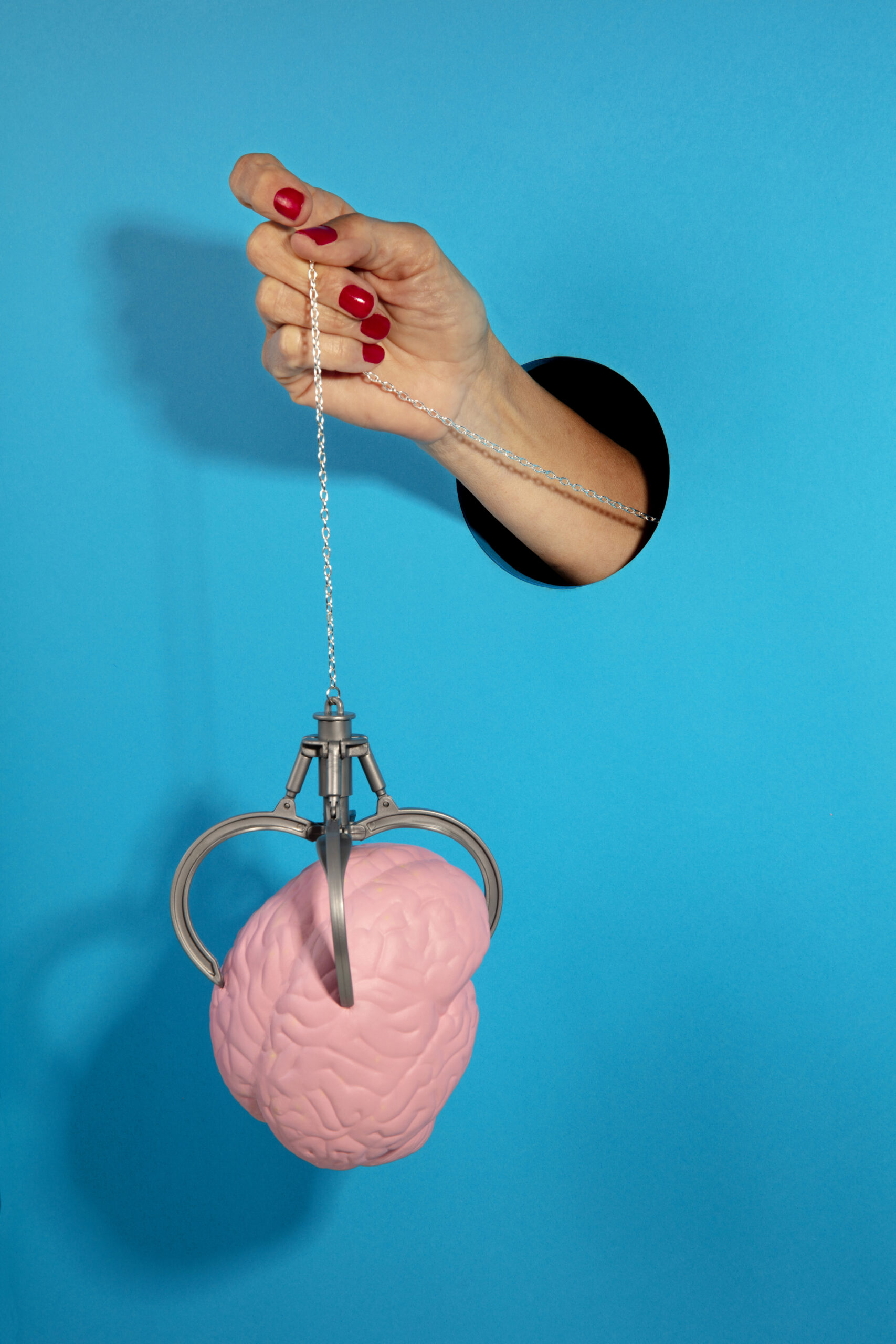
This week, Eli Lilly announced it is buying AtaiBeckley, a psychedelic drug developer, for up to $3.8 billion. The deal gives Lilly a DMT-based treatment currently in late-stage trials for depression, and it is the largest acquisition of its kind to date, following AbbVie’s purchase of a psychedelic drug candidate last year. When a company that once changed the face of psychiatry with Prozac places a multibillion-dollar bet on psychedelics, it is safe to assume these treatments are about to become much more available, much more marketed, and much more woven into ordinary psychiatric care.
I want to be honest about where I stand as this unfolds, because I think it matters, and because I think it is a conversation many of us are having quietly without saying it out loud.
Let me start with the research itself, because I think it gets less scrutiny than it should. The studies behind this excitement are not nearly as impressive as the headlines suggest. Sample sizes are small, effect sizes often shrink once you look past the topline numbers, and there is a structural problem that no amount of funding can fix: you cannot truly blind a psychedelic trial. A person who is given a moderate dose of psilocybin or DMT knows, almost immediately, that they did not receive a sugar pill. So do the therapists sitting with them. That expectation, on both sides of the room, shapes everything that follows, from how the session is guided to how the person rates their own mood afterward. A placebo-controlled study only works if no one knows who got the real thing. In this field, almost everyone does. I do not think we can call something rigorously proven when the basic architecture of a controlled trial cannot hold.
I also think we need to talk plainly about who is funding this research and who stands to profit from its conclusions. Many of the trials driving this wave of enthusiasm are funded directly or indirectly by the same pharmaceutical companies now racing to buy psychedelic drug developers, and many of the researchers running them have financial ties, consulting fees, or institutional relationships with those companies. That does not make every finding false. But it should make us slower to accept results at face value, and more honest about the fact that the people designing the questionnaires, running the trials, and reporting the outcomes are often the same people with a stake in a particular answer.
Part of what makes this field so persuasive is the claim that psychedelics do not just ease symptoms, they regrow the brain. You will hear that these substances trigger neurogenesis, the actual birth of new neurons, and that this is the biological reason depression lifts. It is a beautiful story, and it is getting ahead of the evidence. What the research more reliably shows is something narrower called neuroplasticity, changes in how existing brain cells branch and connect, and even that comes almost entirely from animal studies, not human ones. When it comes to neurogenesis specifically, the findings are inconsistent at best. Some studies found no effect at all, and at least one found a slight decrease. The leap from “we saw changes in a mouse’s dendrites” to “this drug regrows your brain and will heal your depression” is a long one, and I think patients deserve to know how much of that leap is marketing rather than science.
There is a second claim running alongside the first, and it concerns the soul rather than the synapse. Much of the research in this field uses something called the Mystical Experience Questionnaire, a scale that scores a person’s trip on things like unity, sacredness, and a sense of transcending time itself. Higher scores on this questionnaire are consistently linked to better reported outcomes, and this is part of what has led some therapists to believe a bigger, more intense mystical experience is the goal, something worth guiding a person toward. But even here, the evidence softens the longer you look. Long-term follow-up studies have found that link between mystical experience and lasting change fades within a few years, and some carefully controlled trials found no connection between a mystical experience and symptom improvement at all.
I do not claim to know whether people have genuine mystical or spiritual experiences on psychedelics. I have read the accounts, I have listened to patients describe things that sound sacred and true to them, and I hold that with real respect. But here is what I do know: it is not my place, or the place of any psychiatric provider or therapist, to decide that someone should have a spiritual experience. It is not our place to shape one, guide one, or steer a person’s inner life toward a particular kind of revelation while they are under the influence of a powerful substance. That is not treatment. That is something else, and I think we need to be honest about the difference.
Here is what worries me most about where psychiatry seems to be heading. We are, more and more, learning to see a set of chemicals and a stack of outcome measures instead of a whole human being. A questionnaire developed in a research lab can tell you whether a score dropped from a 14 to a 6. It cannot tell you what a person’s marriage is like, what they believe about God, what they lost as a child, or what they are afraid to say out loud in a fifteen-minute follow-up visit. When we let those instruments define what “better” means, we quietly agree to stop asking the harder, slower questions about a person’s whole life. I have spent years sitting with people in their sixties, seventies, and eighties, and I can tell you that no questionnaire has ever captured the real story of a single one of them.
This is not just an academic concern. It is quickly becoming a financial one. Insurance companies, understandably wanting to know what they are paying for, are pushing toward reimbursement tied to measurable outcomes, meaning the same narrow questionnaires used in research trials. But real human growth does not move in tidy numbers. A renewed sense of hope, a restored sense of meaning, a softening toward one’s own life, these are some of the most important markers of healing I see in my patients, and none of them fit neatly into a researcher-created scale. When we let reimbursement systems decide what counts as improvement, we risk building an entire model of care around what is easy to measure rather than what actually matters to the person sitting across from us.
And then there is the question of power, which I think deserves more attention than it gets. During psychedelic-assisted therapy, a person is, by design, vulnerable in a way that is different from ordinary talk therapy. Their usual defenses are down. Their sense of self may be fluid or dissolving. In that state, a therapist in the room has an extraordinary amount of influence over what happens inside another person’s mind. I do not believe that is a right we have been given. It is, at most, a responsibility to be handled with enormous restraint, and I worry that as this field scales up under corporate pressure to produce results, that restraint will be one of the first things lost. It is a very short distance from “guiding” someone through an experience to deciding, consciously or not, what that experience should mean. We need to be very careful anytime we start to believe we know what is best for a particular person’s mind, their spirit, or their story. That belief, however well-intentioned, is where so much harm in psychiatry has begun.
As psychedelics move from the fringes into the mainstream, backed by pharmaceutical giants and driven by trial results, I hope we do not lose the one thing that has always mattered most in this work: staying curious about the whole person in front of us, rather than certain about what they need. The chemicals may be new. That responsibility is not.
Whose Brain Is It, Anyway? Some Concerns About Psychedelics in Psychiatry
July 18, 2026
meet inge
I’m Inge, a Psychiatric Nurse Practitioner passionate about helping others feel grounded, resilient, and well. Here on the blog, I share insights on mental health, prevention, meditation, clean skincare, and nutrition—everything I turn to in my own daily life. I hope this space becomes a trusted part of your wellness journey.
LATEST FROM THE BLOG