
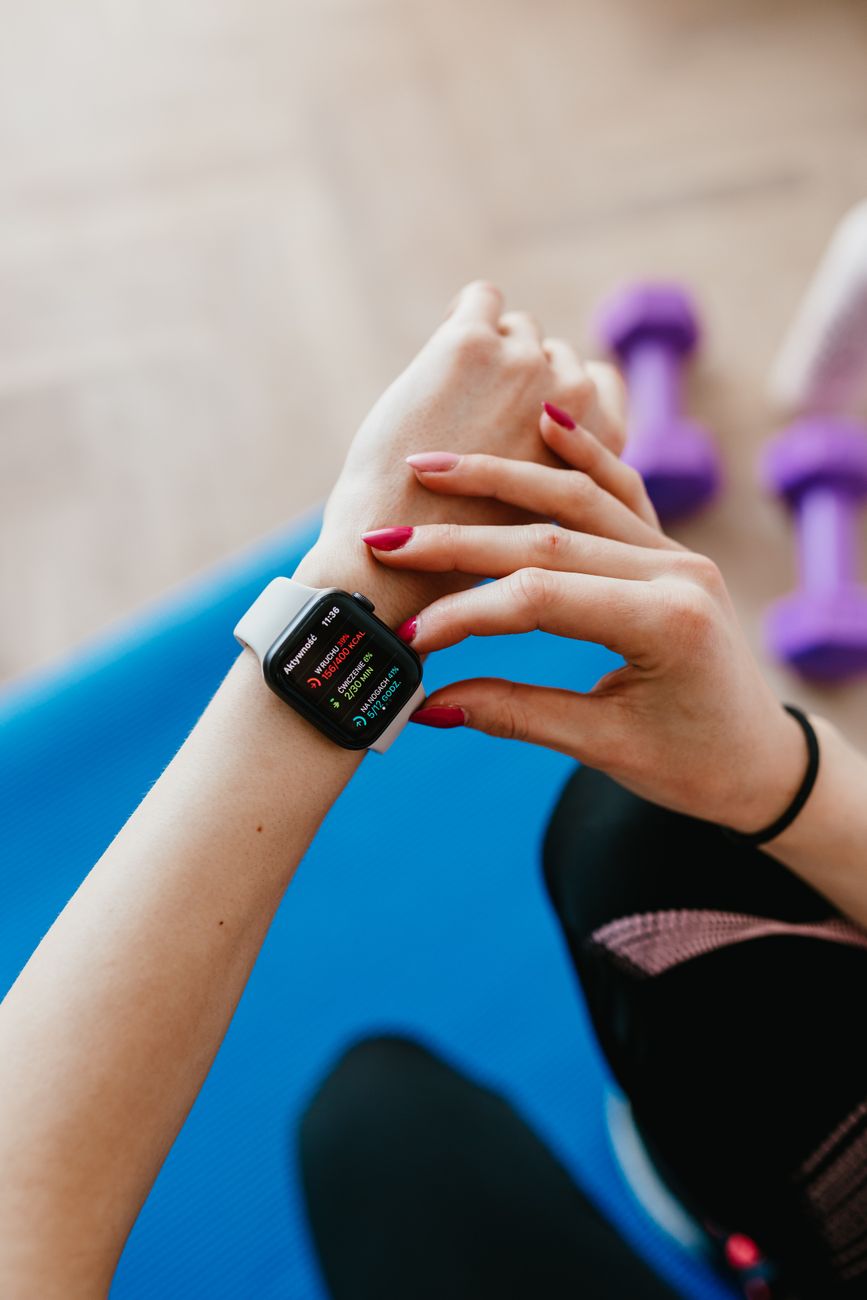
Reclaiming Trust in Your Own Body
There’s an old parable about a cup of tea. A student visits a wise teacher, eager to learn, and begins pouring out everything she already believes she knows. The teacher quietly pours tea into the student’s cup until it overflows, spilling onto the table, onto her hands. “How can I add anything,” the teacher asks gently, “when your cup is already full?”
I think about that story often these days, but not in the way you might expect. I think about it when I picture so many of my patients — capable, thoughtful women who have lived full lives — checking their wrist for the fourth time before breakfast, cup already overflowing with numbers, scores, and alerts, with no room left for anything new to pour in. No room for the morning itself.
If this is you, I want you to hear something first: wanting to take your health seriously is a good instinct. The watch was never going to be your enemy on its own. And checking it again, and again, and again isn’t a character flaw or a sign of weakness. It’s simply what anxiety does when it’s finally given a number to hold onto.
The Pattern I See Almost Every Week
In more than fifteen years of practice, I’ve come to recognize this pattern so clearly that I can usually spot it before a patient even finishes describing it to me. There are three things happening at once, and they reinforce each other.
First, the anxiety was almost always there before the watch. The watch didn’t create it — it simply gave it a new home, a number to attach itself to. Worry needs something to hold onto, and a sleep score or a heart rate reading is awfully convenient.
Second, the data itself is rarely the problem. A slightly lower sleep score, a few extra minutes of “restlessness,” a heart rate that ticked up during a stressful phone call — these are, more often than not, clinically meaningless. What does cause harm is the relationship to checking. The compulsive glance. The way a number can hijack the first ten minutes of your day before your feet have even touched the floor.
And third — this one matters especially for women in their sixties and beyond — a “bad” number doesn’t usually create a new fear. It confirms one that was already quietly there: the cultural whisper that your body, simply by virtue of aging, has become unpredictable. Unreliable. Something to be watched rather than trusted.
The Loop Nobody Warns You About
Here’s the part I find almost ironic, and important enough to say plainly: the very device meant to monitor your stress can become the thing creating it.
You wake up, check your sleep score, see it’s “poor,” and feel that small drop in your stomach. That reaction — however subtle — is itself a stress response. A little surge of cortisol, a little tightening. And that activation primes your nervous system to have a harder time settling that night, which produces another lower score, which you check again the next morning. The watch isn’t lying to you. But it may be quietly participating in the very pattern it claims to simply report on.
“But What If I Miss Something Dangerous?”
This fear deserves a real answer, not a dismissal. For certain diagnosed conditions — an irregular heartbeat, a heart condition your provider is actively monitoring — wearable tracking absolutely has its place, and if a provider has specifically recommended yours, please continue using it and talk with them before making any changes.
But for most of the anxious checking I see, this isn’t what’s happening. What’s happening is something closer to constant self-surveillance, and I want to be honest with you: surveillance is not the same thing as safety. Vigilance is not the same thing as wellness. Your body kept you alive for sixty-plus years before any of this technology existed. You already have instruments. They’re just not digital ones.
What I Recommend — Plainly
Take the watch off. Leave it off, until you’re able to recognize how you actually feel again without a screen telling you first.
I don’t say this lightly, and I don’t say it as one option among many. In my experience, the constant feedback loop these devices create rarely serves the anxious mind — it feeds it. The goal isn’t a better way to monitor yourself. It’s learning to trust yourself again.
(As always, it’s wise to check with your own healthcare provider before changing any monitoring that was specifically prescribed for a diagnosed condition. This recommendation is for the kind of self-initiated, anxiety-driven tracking so many of us fall into — not medically necessary monitoring.)
What Fills the Space
When you set the watch down, you’re not left with a void. You’re left with room — room for your cup to be poured into again.
That room tends to fill, quite naturally, with your actual life. The garden, finally noticed instead of glanced past. A grandchild’s voice on the phone, fully heard instead of half-heard while you check a number. The particular hush before a monsoon storm rolls in over the hills — that thick, electric stillness so many of us know so well this time of year, when the light turns gold-green and everything seems to be holding its breath.
It fills with the people you love, with quiet conversation, with the kind of presence that’s only possible when your attention isn’t divided. It fills with whatever it is you turn to for meaning — for me, that includes a quiet kind of faith, a trust in something larger than my own ability to control every outcome. And it fills, simply, with rest: trusting that your body, given the right environment — sunlight, movement, connection, sleep, and a little less surveillance — knows how to regulate and heal far more than we tend to give it credit for.
As the saying often attributed to Mark Twain goes, “I’ve lived through some terrible things in my life, some of which actually happened.” There’s real wisdom tucked inside that humor — attributed correctly or not. So much of what we monitor for never arrives. And every hour spent on high alert for what probably won’t happen is an hour quietly taken from the life that’s actually happening, right now, outside the window.
You have a right to be present for your life. It is not your job to know everything, to anticipate everything, to think constantly about everything that could go wrong inside your own body. People lived full, long lives for thousands of years without a single wearable device. You can trust yourself. You always could.
A Small Place to Begin
You don’t have to take the watch off today if that feels like too much. Start smaller than that.
Just begin noticing the urge to check it. The next time your hand drifts toward your wrist, pause — just for a breath — before you look. And in that small pause, look up instead. Look out the window. Step outside, even for thirty seconds, and let your eyes land on whatever the real world is doing right now: the sky, the trees, the particular quality of this June light.
That’s the whole practice, for now. Just noticing. The cup empties one small pour at a time.
When the Watch Becomes the Worry
June 22, 2026
meet inge
I’m Inge, a Psychiatric Nurse Practitioner passionate about helping others feel grounded, resilient, and well. Here on the blog, I share insights on mental health, prevention, meditation, clean skincare, and nutrition—everything I turn to in my own daily life. I hope this space becomes a trusted part of your wellness journey.
LATEST FROM THE BLOG

This week, we got the news that no business owner wants to hear: our building had been sold, and we were being asked to leave. No warning, no transition period — just pack up and go. My first reaction? Honestly, it wasn’t peaceful. It was the kind of sudden, jarring disruption that puts your nervous […]


I had a friend tell me something last week that stopped me in my tracks. She said, “I feel like I’m drowning in other people’s thoughts.” She’s 67, retired from teaching, and spends hours each day scrolling through news apps, checking Facebook, watching YouTube videos about gardening (her passion), and texting with her grandchildren. All […]