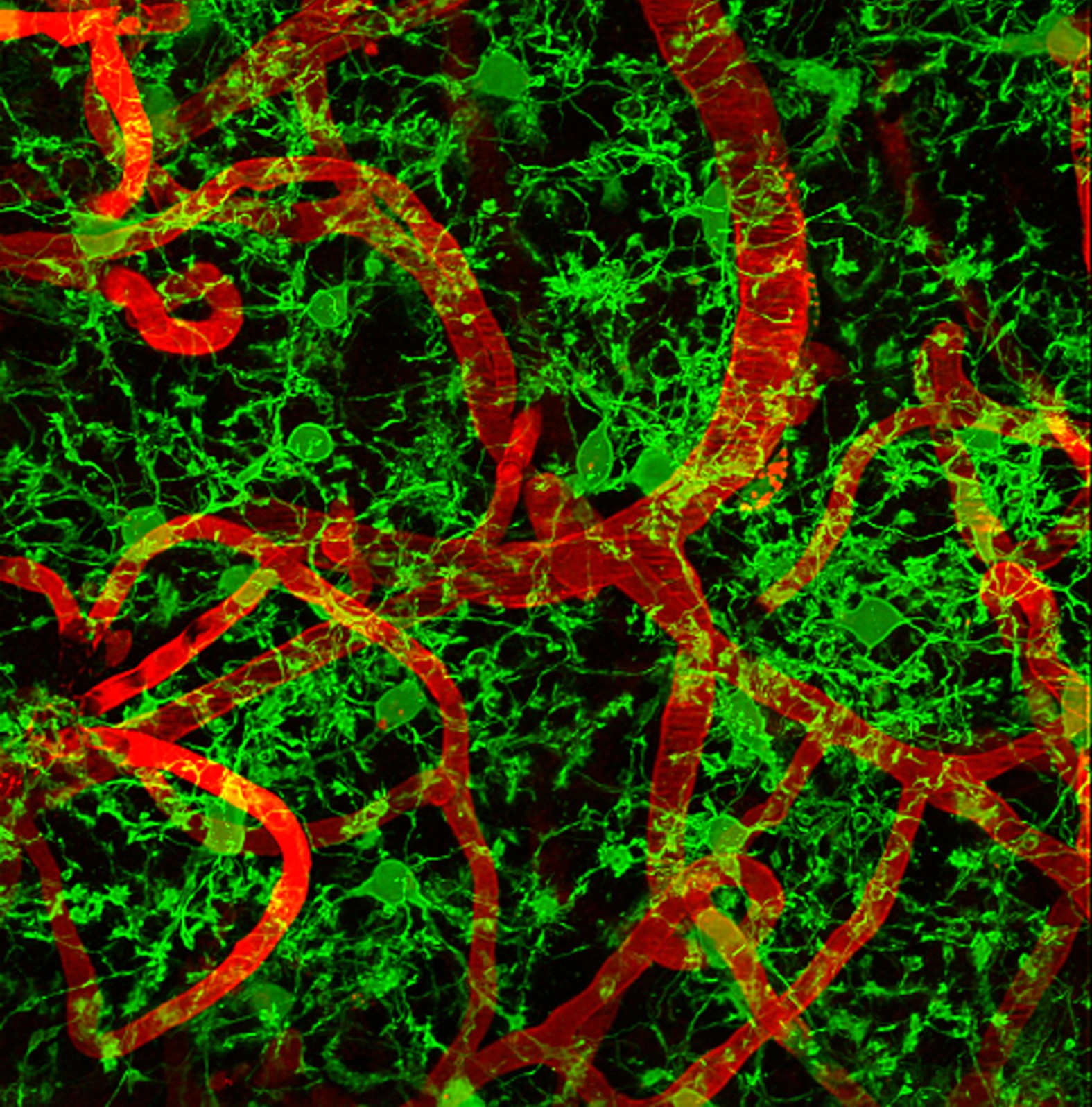
When you think about your immune system – the wonderful defense network in your body that fights disease and kills intruding pathogens – where do you imagine it to be? Deep in your belly? In your blood? Maybe in your lymph nodes? You’re not alone if you pictured some interior region of your body.
What you might not know is that your brain has one, too.
Not that it’s entirely separate from the rest of your body; most of the time, your brain is barricaded behind the blood-brain barrier, a tightly woven membrane that keeps most of the foreign substances in your blood out. But within that barrier, working tirelessly to keep you healthy, is another set of defenses – another type of cell that has been doing its job for you long before you were born. These cells have been adapting their behavior to constantly meet the demands of the environment you live.
So much of what makes those cells so interesting is that you have tremendous control over how well they do their jobs.
The Cells Nobody Talked About
Your brain’s defenders are called microglia. Microglia are resident, highly mobile immune cells in the brain that constantly check the brain for signs of tissue damage and for foreign and damaged material that needs to be cleared.
They’re similar to the white blood cells called macrophages that are found in the body, but these are the clean-up crew and security system for your brain.
They’re also one of the most fascinating parts of neuroscience, and not just because of their vital role in brain maintenance. Microglia make up between ten and fifteen percent of the cells in your brain, but for most of history, they weren’t considered interesting. The other kind of brain cell, neurons, got most of the attention, and microglia were seen as little more than humble assistants. That changed recently, as we’ve learned to appreciate their remarkable ability to change their activity patterns to meet new circumstances.
Recent research indicates that microglia exhibit an extraordinary ability to shift roles depending on what the brain needs, allowing them to respond to a wide variety of physiological and pathological events. Individual differences in microglial reactivity arise from a combination of genetic and environmental factors, and these differences contribute to substantial variation in brain health outcomes. In the last decade, researchers uncovered the critical contribution of microglia to virtually all aspects of brain function, including neurodegeneration. Neurodegeneration is the gradual breakdown of brain cells and the connections between them — a process that, over time, can affect memory, thinking, and the ability to function in daily life.
This is a huge shift in the way we look at and approach cognitive decline and Alzheimer’s.
What Microglia Actually Do
When healthy, microglia perform all sorts of remarkable functions in your brain. First, let’s consider what they do for you, and then we’ll examine what goes wrong.
Microglia are the constant guardians of the nervous system, and they perform their duties remarkably well. For instance, they help coordinate communication between the neurons, supporting cells called astrocytes and oligodendrocytes, as well as the peripheral immune system – in other words, the rest of your body. They do this by managing the ongoing conversation between your brain and your body’s immune system.
They’re the intelligence and information system within your brain, relaying information and influencing the way other cells function. It’s impossible to overestimate their importance and the degree to which their work is woven together with that of the rest of your body.
They clean up. Microglia are garbage collectors for the brain, and one of their most important jobs is to remove cellular debris that accumulates as a result of normal cell death or other pathological processes. This cleanup is necessary, as the debris left behind by dying cells can be harmful to surrounding tissue. The most familiar example of this is amyloid accumulation, which is a well-known feature of Alzheimer’s disease, but there are many other types of cellular junk that need to be removed. This function is particularly important to protect the brain because neuroinflammation is a significant risk factor for a variety of neurodegenerative conditions that affect human cognition.
They fight infections and injuries. When microglia sense the presence of a threat, they trigger an immune response to eliminate it.
Finally, they facilitate the growth of new connections between neurons. Microglia are increasingly viewed as important regulators of brain development, maturation, and plasticity. They help the brain stay sharp by pruning away connections that are no longer useful and reinforcing the ones that are — a kind of continuous fine-tuning that keeps your mind working at its best.
When you consider their sheer versatility, it’s no wonder that neuroscientists have nicknamed microglia the “brain’s gardeners.” And most importantly, there are things you can do to ensure that your brain defenders are able to perform at their peak.
When the Defenders Become Distressed
There’s good news and bad news about microglia. Think of them as quiet guardians — always on duty, always working on your behalf, asking nothing in return. But while they’re remarkably resilient, there are factors that can push them beyond their limits and cause them to malfunction.
When stressed, distressed microglia can lead to neuroinflammation; the precise triggers are numerous and will be discussed at length later in this series.
Neuroinflammation is now understood to be a crucial factor in the development of several age-related diseases, notably Alzheimer’s disease and Parkinson’s disease, but also depression and other psychiatric and neurologic conditions.
Stress, the microbiome, diet, sleep, and physical activity each play a role in regulation of the immune system in the brain, potentially affecting an individual’s risk for neurodegenerative disease.
What is so wonderful about this new approach is that these are all lifestyle factors, meaning that they’re closely linked to your behavior and attitude, which in turn means that they’re often nearly completely within your control.
The News That Changes the Story
For a long time, the established wisdom about dementia was that it was largely genetic: if your parents had it, you likely would, too, with advancing age being the biggest risk factor anyone could do nothing about. That’s no longer considered to be true.
While advanced age is still associated with increased risk, it’s now understood to be a separate variable that affects the risk in everyone equally, and the defining characteristic of healthy aging in general is that it’s not normal to become demented as you age. The fact that people develop dementia is connected more to individual lifestyles and behaviors than to unavoidable biological decline.
In practice, that means that your microglia and their ability to keep you healthy in spite of your advancing years have a large degree of influence on whether you’re going to develop dementia later in life.
There are certain environmental factors that are positively correlated with healthy aging, and that includes exercising and eating right. But it turns out that physical activity, mental challenges, and healthy, positive environments each modify microglia to produce specific beneficial effects on neural circuits and brain regions, helping the brain stay adaptable and resilient — qualities that matter more and more as we get older.
In short, there are behaviors that have a tremendously positive effect on your brain’s ability to keep you healthy and protect you from disease throughout your life. As you can see, there’s a lot to be said for the value of a healthy lifestyle, and it’s not just in preventing dementia.
This is only the beginning, and there’s so much to talk about – the ways in which your gut influences and is influenced by your brain, the different types of stress and what they do to you, what sleep is truly doing for your brain beneath the surface, and much more. In the weeks ahead, we’ll explore everything that shapes the health of your brain’s immune system — and what you can do, starting now, to support it. My goal is to help you understand the processes that make you healthy and happy, and it’s my sincere hope that this series will inspire you to think about ways in which you can improve your own personal well-being.
Your brain has never stopped defending itself. Those defenders are there right now, on duty, working quietly on your behalf. What comes next is simply learning how to help them. And that is exactly where we’ll begin.
Meet Your Brain’s Secret Defense System: What Microglia Are and Why They Matter
August 28, 2026
meet inge
I’m Inge, a Psychiatric Nurse Practitioner passionate about helping others feel grounded, resilient, and well. Here on the blog, I share insights on mental health, prevention, meditation, clean skincare, and nutrition—everything I turn to in my own daily life. I hope this space becomes a trusted part of your wellness journey.
LATEST FROM THE BLOG

When Your Body Remembers What Your Mind Tries to Forget Have you ever noticed how grief settles into your shoulders? How anxiety lives in your chest like a bird that won’t stop fluttering? Or how years of unspoken words seem to tighten around your throat? If you’re nodding right now, you’re not imagining things. Your […]


I had a friend tell me something last week that stopped me in my tracks. She said, “I feel like I’m drowning in other people’s thoughts.” She’s 67, retired from teaching, and spends hours each day scrolling through news apps, checking Facebook, watching YouTube videos about gardening (her passion), and texting with her grandchildren. All […]

This week, we got the news that no business owner wants to hear: our building had been sold, and we were being asked to leave. No warning, no transition period — just pack up and go. My first reaction? Honestly, it wasn’t peaceful. It was the kind of sudden, jarring disruption that puts your nervous […]